
Have you ever typed “paster or pastor” and paused, unsure which one is right? You’re not alone. These two words look almost identical, but they mean very different things—and using the wrong one can completely change your sentence.
In this guide, we’ll break down pastor vs paster, explain what each word means, and show you how to use them correctly in real-life situations. By the end, you’ll never mix them up again.
What Is a Pastor?
Let’s start with the more commonly used word.
Definition of Pastor
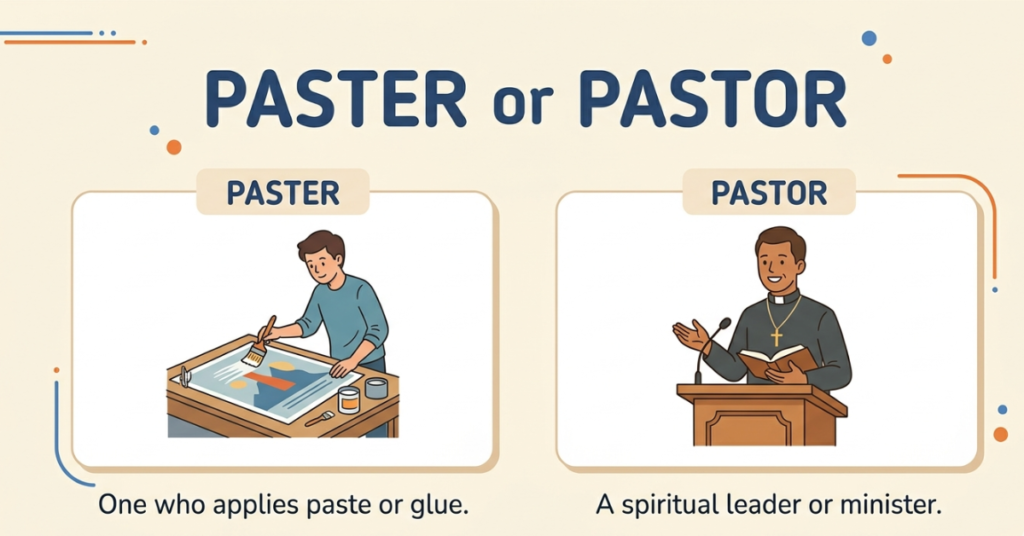
A pastor is a religious leader, typically in a Christian church, who provides spiritual guidance, delivers sermons, and cares for a congregation.
Key responsibilities of a pastor:
- Leading worship services
- Offering spiritual counseling
- Teaching religious texts
- Supporting community members
Example sentences:
- “The pastor gave a powerful sermon on Sunday.”
- “She spoke to her pastor for guidance.”
When asking “pastor or paster”, this is usually the word people mean.
What Is a Paster?
Now let’s look at the less common term.
Definition of Paster
A paster is someone who pastes or sticks things together using glue or adhesive. It can also refer to a tool or device used for applying paste.
Where you might see “paster”:
- Craft or DIY work
- Printing or publishing (historically)
- Packaging or labeling tasks
Example sentences:
- “He worked as a paster in a printing shop.”
- “Use a brush or paster to apply the glue evenly.”
So if you’re wondering “what is a paster”, it has nothing to do with religion—it’s about sticking things together.
Pastor vs Paster: Key Differences
Here’s a simple breakdown to avoid confusion:
| Word | Meaning | Usage |
| Pastor | Religious leader | Churches, faith, community |
| Paster | One who pastes things | Crafts, printing, adhesives |
Quick tip:
- Pastor → People (religion)
- Paster → Paste (glue)
Why Do People Confuse Paster and Pastor?
The confusion between paster vs pastor comes down to:
- Similar spelling (only one letter difference)
- Similar pronunciation in some accents
- Typing errors or autocorrect mistakes
In most everyday situations, “pastor” is the correct word, especially in conversations about religion.
How to Remember Pastor or Paster
If you often mix up pastor or paster, here are a few easy tricks:
1. Think of the context
- Talking about church? → Pastor
- Talking about glue or sticking? → Paster
2. Use word association
- Pastor = Preacher (both start with “P”)
- Paster = Paste
3. Check your sentence
Read your sentence out loud. If it involves faith, leadership, or a congregation, “pastor” is the right choice.
Common Mistakes to Avoid
When dealing with pastor vs paster, avoid these errors:
- Writing “paster” when referring to a church leader
- Assuming both words mean the same
- Ignoring context clues in a sentence
Correct vs Incorrect:
- “The paster gave a sermon.”
- “The pastor gave a sermon.”
When Should You Use Each Word?
Use “Pastor” when:
- Referring to a church leader
- Talking about religion or spirituality
- Writing formally about faith
Use “Paster” when:
- Describing someone applying glue
- Talking about crafts or printing
- Referring to adhesive tools or roles
FAQs About Paster or Pastor
1. Is it paster or pastor?
It depends on the meaning. Pastor is a religious leader, while other refers to someone who applies paste.
2. What is a paster?
A paster is a person or tool used for sticking things together with adhesive.
3. Which word is more common?
Pastor is far more common in everyday language.
4. Can paster be used in religious context?
No, using “paster” in place of “pastor” is incorrect in religious contexts.
5. How do I avoid confusing pastor vs paster?
Remember:
- Pastor → Church
- Paster → Glue
Conclusion: Paster or Pastor—Know the Difference
When it comes to paster or pastor, the difference is simple but important.
- Pastor relates to religion and leadership
- Paster relates to glue and sticking things together
In most cases, if you’re writing about a person in a church, “pastor” is the correct choice. Taking a second to check the context can save you from a common (and sometimes embarrassing) mistake.
If you want to sharpen your writing further, keep exploring similar word comparisons—mastering small details like this can instantly make your communication clearer and more professional.