
If you’ve ever seen curtesy vs courtesy and felt confused, you’re definitely not the only one. These two words look similar at first glance, but only one of them is commonly used in modern English.
The correct spelling in most situations is “courtesy.” The word “curtesy” exists too—but it has a very different meaning and is rarely used today. Let’s break down curtesy or courtesy meaning, clear up the confusion, and make it easy to remember.
Curtesy vs Courtesy: The Correct Answer
Here’s the simple truth:
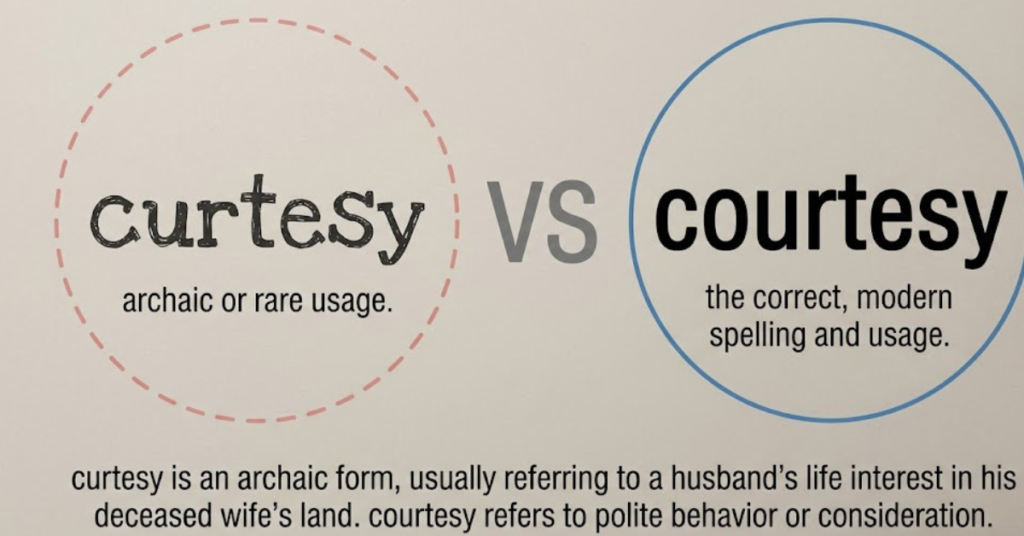
- Courtesy = politeness, respect, good manners (modern usage)
- Curtesy = old legal term (rare, historical use only)
So when people search courtesy or curtesy, they are usually looking for courtesy.
What Does “Courtesy” Mean?
The word courtesy meaning refers to polite behavior and respectful actions toward others.
Common meanings of courtesy:
- Politeness and good manners
- Respectful behavior
- A kind or considerate action
Examples:
- “He showed great courtesy to the guests.”
- “It’s a courtesy to hold the door open.”
So in everyday English, courtesy is the word you want.
What Does “Curtesy” Mean?
Now let’s talk about the less common word in curtesy vs courtesy.
Curtesy meaning:
Curtesy is a legal term from old English law. It refers to a husband’s right to his deceased wife’s property under certain conditions.
Key points:
- Used in historical legal systems
- Not common in modern conversation
- Mostly seen in legal history books
So if you’re wondering curtesy meaning, it has nothing to do with politeness.
Why People Confuse “Curtesy or Courtesy”
The confusion between curtesy or courtesy happens for a few reasons:
1. Similar spelling
Both words look almost identical.
2. Pronunciation
They sound nearly the same when spoken quickly.
3. Modern usage gap
Most people only hear “courtesy,” so “curtesy” feels unfamiliar but still “correct-looking.”
Easy Way to Remember Courtesy vs Curtesy
Here’s a simple trick:
Courtesy = “court” + polite behavior (think royal manners)
Curtesy = old legal court term (rare and historical)
Quick memory tip:
- Courtesy = kindness
- Curtesy = law history
This makes it easier to avoid mixing up curtesy vs courtesy.
Common Uses of Courtesy in Everyday Life
Here are practical ways courtesy is used today:
- Customer service: “as a courtesy, we offer free delivery”
- Social behavior: “please show courtesy to others”
- Travel: “courtesy shuttle available”
- Communication: “courtesy call before arrival”
In all modern contexts, courtesy is the correct word.
Why Using the Correct Word Matters
Choosing the correct spelling in courtesy or curtesy meaning matters because:
- It improves clarity in writing
- It avoids confusion in professional communication
- It shows strong language skills
- It prevents outdated or incorrect usage
In most real-life writing, courtesy is always the safe and correct choice.
FAQs
What is the difference between curtesy and courtesy?
Courtesy means politeness, while curtesy is an old legal term.
Is it curtesy or courtesy for politeness?
The correct word is courtesy.
What does curtesy mean in law?
It refers to a historical husband’s property right after his wife’s death.
Is curtesy still used today?
Rarely. It is mostly found in legal history, not modern English.
Why do people confuse curtesy vs courtesy?
Because they look and sound very similar.
Conclusion
When it comes to curtesy vs courtesy, the answer is clear: courtesy is the correct modern word used for politeness and respectful behavior. The word “curtesy” is a rare historical legal term and is not used in everyday English.
Once you understand the difference, courtesy or curtesy meaning becomes simple—one is about manners, and the other belongs to legal history. For most writing and conversation, always stick with courtesy.