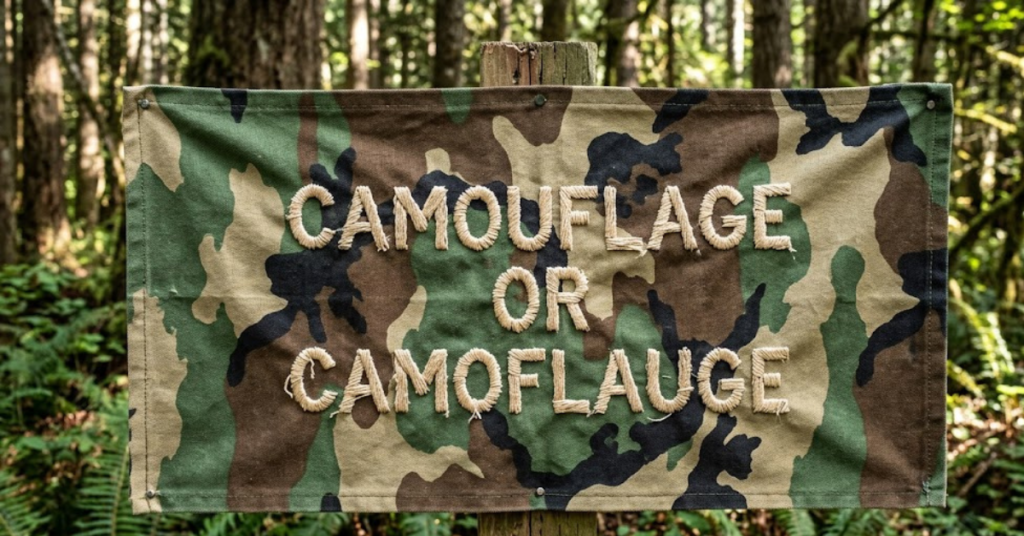

Ever wondered whether it’s spelled camouflage or camoflauge? You’re not alone—this is one of the most commonly misspelled words in English. The correct spelling is camouflage, but the confusion around “camoflauge” is so widespread that it often shows up in searches and everyday writing.
In this guide, we’ll break down the meaning of camouflage, its correct spelling, and how it’s used in nature, military strategy, fashion, and even digital design. By the end, you’ll not only know how to spell it correctly but also understand why it matters.
Camouflage or Camoflauge: Correct Spelling Explained
Let’s settle the spelling debate first.
Correct spelling:
- Camouflage
Incorrect spelling:
- Camoflauge
- Camoflage
- Camoflouge
The word comes from French, which is why the spelling feels unusual. English adopted it with the original structure intact, even though it doesn’t follow typical English spelling patterns.
What Does Camouflage Mean?
Camouflage refers to the ability to hide or blend into surroundings to avoid being seen or noticed.
Simple definition:
Camouflage is a method of concealment that makes something difficult to detect.
It’s used in many fields, including biology, military operations, fashion, and technology.
Camouflage in Nature
One of the most fascinating uses of camouflage is in the animal kingdom.
Examples include:
- Chameleons changing color
- Stick insects blending into branches
- Snow hares turning white in winter
- Octopuses mimicking textures and colors
Why animals use camouflage:
- To avoid predators
- To sneak up on prey
- To survive in changing environments
Nature is the original master of disguise.
Military Use of Camouflage
Camouflage is widely used in military strategy to conceal soldiers, equipment, and vehicles.
Common techniques:
- Camouflage uniforms
- Netting and coverings for tanks
- Face paint for blending into terrain
- Disruptive pattern designs
The goal is simple: reduce visibility and increase survival.
Camouflage in Fashion and Design
Camouflage isn’t just for survival—it’s also a fashion statement.
Popular uses in clothing:
- Camo jackets
- Cargo pants
- Streetwear patterns
- Accessories and footwear
Designers often use camouflage patterns for style rather than concealment.
Digital and Modern Uses of Camouflage
In today’s world, camouflage has expanded beyond physical environments.
Examples include:
- Digital camouflage in gaming graphics
- Stealth technology in vehicles
- UI design that blends elements subtly
- Military-grade stealth aircraft coatings
Technology has taken camouflage to a whole new level.
Why “Camoflauge” Is a Common Misspelling
So why do so many people type “camoflauge”?
Reasons include:
- Phonetic spelling confusion
- Influence of similar-sounding words like “flourish” or “laundry”
- Lack of exposure to correct written form
- Autocorrect errors reinforcing mistakes
Even though it looks logical, “camoflauge” is incorrect in standard English.
Tips to Remember the Correct Spelling
Here’s a simple trick to avoid mistakes:
Memory aid:
Break it down like this:
Camou + flage = camouflage
Think of it as “camera + camouflage = hidden camera”—it helps lock in the correct spelling visually.
Common Uses of Camouflage
1. Wildlife survival strategies
2. Military concealment
3. Fashion trends
4. Hunting gear
5. Photography and filmmaking
Each use shares one core idea: staying hidden or blending in.
FAQs About Camouflage or Camoflauge
1. What is the correct spelling, camouflage or camoflauge?
The correct spelling is camouflage.
2. Why is camouflage spelled that way?
It comes from French, which preserves its original spelling rules.
3. What does camouflage mean in simple terms?
It means blending into surroundings to avoid being seen.
4. Is camoflauge ever correct?
No, it is a common misspelling and not accepted in formal English.
5. Where is camouflage used most?
It is used in nature, military, fashion, and design industries.
Conclusion
The confusion between camouflage or camoflauge is understandable, but the correct spelling is always camouflage. Beyond spelling, the concept itself plays a huge role in nature, military strategy, fashion trends, and modern technology.
Whether you’re writing, studying, or just curious, remembering the correct form will help you communicate more clearly. And now that you understand its meaning and uses, you’ll never second-guess it again.