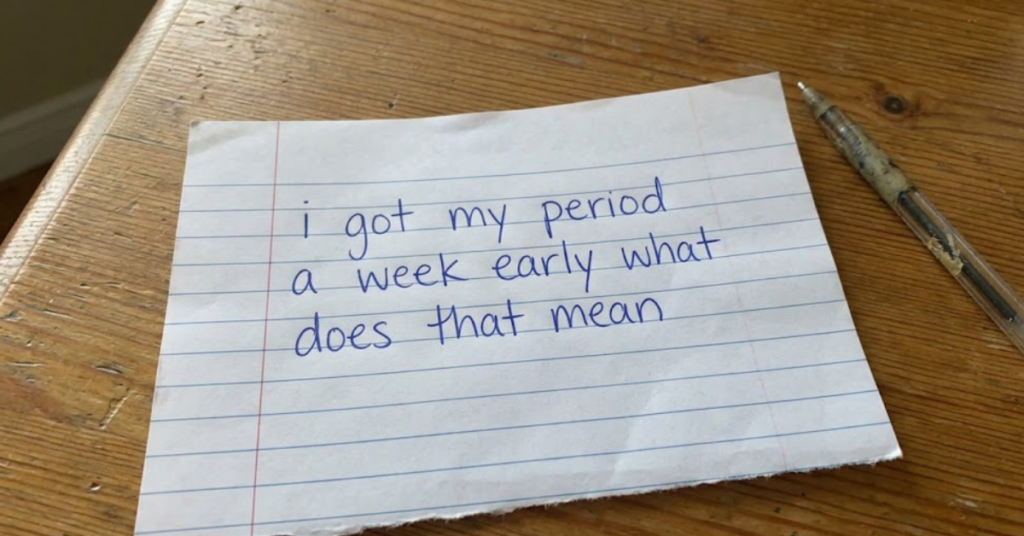

Noticing your period show up earlier than expected can feel confusing—or even a little alarming. If you’re thinking, “I got my period a week early—what does that mean?”, you’re definitely not alone. Menstrual cycles aren’t always perfectly predictable, and an early period can happen for several reasons, most of which are completely normal.
In this guide, we’ll walk through the common causes, what your body might be telling you, and when it’s worth checking in with a healthcare provider.
Is It Normal to Get Your Period Early?
Short answer: Yes, it can be.
A typical menstrual cycle ranges from 21 to 35 days, and slight variations are common. Getting your period a week early might still fall within a normal cycle range, especially if your timing fluctuates from month to month.
What counts as “early”?
- If your cycle is usually 28 days and it comes on day 21 → slightly early
- If it happens occasionally → usually not a concern
- If it happens frequently → worth looking into
Common Reasons Your Period Came a Week Early
Understanding why this happens can help you feel more in control. Here are the most common causes:
1. Stress and Lifestyle Changes
Stress is one of the biggest disruptors of your menstrual cycle.
- Emotional stress (work, relationships, exams)
- Physical stress (lack of sleep, illness)
- Sudden routine changes
The Stress affects hormone levels, which can trigger an early period.
2. Hormonal Fluctuations
Your cycle is controlled by hormones like estrogen and progesterone. Even small changes can shift timing.
Common triggers include:
- Starting or stopping birth control
- Hormonal imbalances
- Natural monthly variations
3. Birth Control Methods
If you’ve recently started, stopped, or changed birth control, your body may still be adjusting.
- Pills, patches, injections, or IUDs
- Missed or irregular doses
- Hormonal shifts during adjustment
4. Ovulation Changes
Sometimes you ovulate earlier than usual, which leads to an earlier period.
This can happen due to:
- Stress
- Travel or time zone changes
- Changes in diet or exercise
5. Weight Changes or Diet
Sudden weight gain or loss can affect hormone production.
- Crash dieting
- Over-exercising
- Nutritional deficiencies
Your body needs balance to maintain a consistent cycle.
6. Underlying Health Conditions
Less commonly, an early period may be linked to medical conditions.
Examples include:
- Thyroid issues
- Polycystic ovary syndrome (PCOS)
- Uterine fibroids
If early periods happen regularly, it’s worth getting checked.
Could It Be Something Other Than a Period?
Sometimes what looks like an early period isn’t actually one.
Possibilities include:
- Spotting: Light bleeding between cycles
- Implantation bleeding: Early pregnancy sign (lighter and shorter)
- Breakthrough bleeding: Common with birth control
If the bleeding is unusual (lighter, darker, or shorter), it might not be your actual period.
When Should You Be Concerned?
Most of the time, an early period isn’t a big deal. But there are situations where you should pay closer attention.
See a doctor if:
- It happens frequently (every cycle)
- Your periods become very irregular
- You experience severe pain
- Bleeding is unusually heavy or prolonged
- You suspect pregnancy
Trust your instincts—if something feels off, it’s okay to get it checked.
How to Track and Manage Your Cycle
Keeping track of your cycle can help you spot patterns and understand your body better.
Simple steps:
- Use a period tracking app or calendar
- Note start and end dates
- Track symptoms (cramps, mood, flow)
- Record lifestyle changes (stress, diet, sleep)
Over time, this gives you a clearer picture of what’s normal for you.
Tips to Keep Your Cycle Regular
While not everything is in your control, these habits can help:
- Maintain a balanced diet
- Get enough sleep (7–9 hours)
- Manage stress (exercise, meditation)
- Avoid extreme dieting or overtraining
- Stay consistent with birth control
Small lifestyle tweaks can make a big difference.
FAQs
1. I got my period a week early—what does that mean for pregnancy?
It usually doesn’t mean pregnancy, but if the bleeding is lighter or unusual, consider taking a test to be sure.
2. Is it bad to have an early period once?
No, a one-time early period is usually normal and not a cause for concern.
3. Can stress really make my period come early?
Yes. Stress can disrupt hormones and trigger early or delayed periods.
4. How early is too early for a period?
If your cycle is consistently shorter than 21 days, it may need medical evaluation.
5. Should I worry if my period is early and heavy?
If it’s unusually heavy or painful, it’s best to consult a healthcare provider.
Conclusion
So, “I got my period a week early—what does that mean?” In most cases, it’s your body responding to everyday factors like stress, hormonal changes, or lifestyle shifts. Occasional changes are normal, and your cycle doesn’t always follow a strict schedule.
However, if early periods become frequent or come with unusual symptoms, don’t ignore it. Tracking your cycle and staying aware of your body is the best first step.
If you’re unsure, the next move is simple: talk to a healthcare professional. It’s always better to get clarity than to keep guessing.