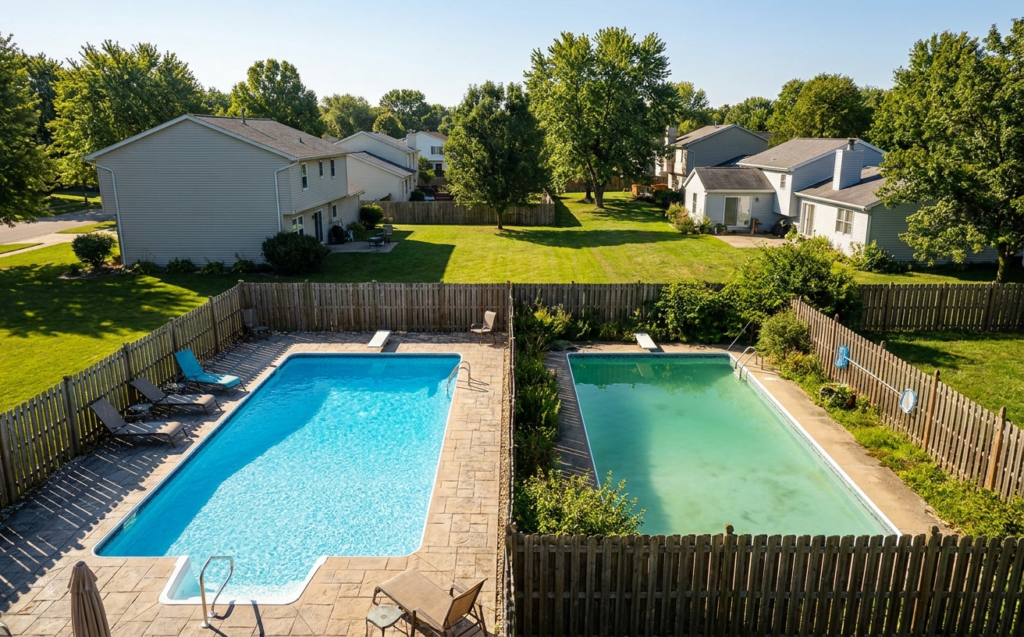

Your neighbor’s pool always looks pristine. Yours requires constant attention. The pools are the same size, the same shape, built the same year by the same contractor. Yet one is effortless and the other is a recurring headache. The difference is not the pool. It is everything around it.
Pool maintenance is not a fixed obligation. It is a variable that depends on climate, surroundings, usage patterns, equipment condition, and the consistency of the person doing the work. Understanding which variables matter most lets you control them, and controlling them is what separates an easy pool from a difficult one.
The Climate Multiplier
A pool in Phoenix and a pool in Seattle of the same size and design will have completely different maintenance profiles. Heat accelerates chlorine consumption. Sunlight degrades cyanuric acid. Long swimming seasons mean more months of active maintenance.
In hot, sunny climates, chlorine can drop from adequate to zero in a single afternoon if the cyanuric acid level is too low. Algae grows faster in warm water. Evaporation is higher, which concentrates minerals and requires more frequent topping off. Each of these factors adds work.
Cooler climates have shorter seasons but their own challenges. Rain introduces contaminants and dilutes chemicals. Leaves and organic debris fall for months. Freezing temperatures threaten plumbing and equipment. The specific demands differ, but neither climate is maintenance-free.
Surroundings: The Debris Equation
The single largest variable in weekly pool maintenance is the amount of debris that enters the water. A pool surrounded by concrete with no trees nearby might collect nothing but dust and the occasional insect. A pool under a canopy of oak trees will collect leaves, acorns, pollen, and insects by the pound.
Debris is not just a visual nuisance. Every leaf that sinks and decomposes consumes chlorine, releases phosphates, and feeds algae. A pool with heavy debris load requires more frequent vacuuming, more chlorine, more filter cleaning, and more shock treatments than a pool with minimal debris.
This is why two identical pools in the same neighborhood can have completely different maintenance requirements. One is next to a parking area. The other is under three mature trees. The debris load alone can double or triple the weekly effort.
Usage Patterns and Their Hidden Costs
A pool that hosts a family of five every weekend has different demands than a pool that sits unused for weeks at a time. Swimmers introduce sweat, sunscreen, cosmetics, and organic waste. Each person who uses the pool adds a measurable contaminant load that chlorine must neutralize.
Heavy usage also increases evaporation from splashing and increases the amount of debris tracked in from the surrounding area. After a pool party, the water often needs a shock treatment and a thorough vacuum to restore clarity and balance.
Ironically, pools that are used infrequently can also develop problems. Stagnant water with minimal circulation creates dead zones where algae can establish. The key is consistency rather than intensity. Regular light use with consistent maintenance is easier to manage than sporadic heavy use followed by long idle periods.
Equipment Condition: The Compounding Factor
A pump that runs at full efficiency circulates the entire pool volume in six hours. A pump with worn impellers or clogged pipes might take ten hours to achieve the same turnover. The difference is not just runtime. It is the quality of circulation, which affects every aspect of water chemistry.
Poor circulation creates dead zones where chlorine cannot reach and debris accumulates. These dead zones become algae starting points that spread to the rest of the pool. The response is usually more chemicals and more shock, but the real fix is better circulation.
Filter condition matters equally. A clean cartridge filter traps particles down to ten microns. A clogged filter lets particles pass through and return to the pool. The water looks hazy despite normal chemical levels, and the owner responds with more chemicals when the actual problem is filtration.
When people ask how much does pool maintenance cost, the answer depends heavily on whether the equipment is functioning properly or slowly degrading. Well-maintained equipment reduces chemical demand, reduces runtime, and reduces the frequency of problem-solving interventions.
The Consistency Premium
The most important variable is not climate, debris, or equipment. It is consistency. A pool that receives basic attention every few days stays manageable. A pool that is neglected for two weeks and then given an intensive cleanup stays in a cycle of crisis and recovery that consumes far more time and chemicals.
Weekly maintenance is predictable. You test the water, adjust chemicals, run the cleaner, and empty the baskets. It takes thirty minutes if you stay on schedule. Miss two weeks, and the same pool might need two hours of work plus a shock treatment to recover.
Consistency also prevents the cascade failures that drive maintenance demands upward. Low chlorine for a day is a minor adjustment. Low chlorine for a week is an algae bloom. An algae bloom requires triple the normal chlorine, algaecide, filter cleaning, and vacuuming. One missed week creates three weeks of extra work.
Automation as the Great Equalizer
Robotic cleaners, automatic chlorinators, and smart timers reduce the consistency problem by handling routine tasks without requiring human attention. A robotic cleaner that runs on a schedule removes debris before it decomposes, which reduces chlorine demand and prevents algae.
An automatic chlorinator maintains a steady chlorine level instead of the peaks and valleys that come from manual dosing. Smart timers adjust pump runtime based on temperature and season, ensuring adequate circulation without wasting electricity.
The initial investment in automation pays for itself through reduced chemical consumption, reduced manual labor, and fewer problem-solving interventions. A pool with basic automation can be maintained in fifteen minutes a week. A pool without it requires at least double that, and more when problems arise.
Taking Control of Your Variables
You cannot change your climate. You may not be able to move your trees. But you can control your equipment condition, your maintenance consistency, and your level of automation. These are the levers that determine whether your pool is a pleasure or a burden.
Start with the equipment. Make sure the pump, filter, and cleaner are all functioning properly. Then establish a consistent weekly routine that covers testing, chemical adjustment, and physical cleaning. Finally, add automation where it makes the biggest difference: a robotic cleaner for debris and an automatic chlorinator for chemical consistency.
The pool itself is not the variable. The system around it is. Fix the system, and the maintenance takes care of itself.