


A Straight Nose is a very common and classic facial feature. It means the bridge of your nose goes straight down from your eyes to the tip without any bumps or curves. Many people love this shape because it looks very balanced on the face. If you look in the mirror and see a smooth line from top to bottom, you likely have this look. The nasal bones near the top and the cartilage near the bottom line up just right. This creates a clean profile from the side. You might notice that sunglasses sit very easily on a straight bridge because there is no bump to push them out of place. It is a simple, neat shape that fits many different face types. Everyone has a unique face, and a straight bridge is just one of the many wonderful ways people look. It does not change how you breathe or talk, but it is a fun detail to notice when you study portraits or look at photos with your friends.
The History and Meaning of Straight Noses
People have talked about facial shapes for a long time. In old art and statues from ancient Greece, artists often carved statues with a straight nose. They thought this shape looked very calm and neat. Because of this old art, many people grew to see a straight nasal bridge as a sign of classic beauty. But beauty is different everywhere you go! Every culture has its own idea of what looks nice, and every single nose shape is special. Long ago, people even tried to guess a person’s character by the shape of their face. We now know that your facial features do not tell us if you are kind or smart. They are just traits you get from your family tree. Your genes decide how your nose grows before you are even born. Learning about how people viewed facial features in the past helps us see how ideas change over time. It is interesting to look at old paintings and spot the straight lines artists loved to paint.
Different Types of Nasal Profiles
The human face comes in so many wonderful shapes. While some people have a straight nose, others have different nasal bridge styles. A Roman profile has a high bridge with a small downward bend or hook near the middle. A snub or button style turns up a little bit at the tip. A aquiline shape has a noticeable curve that stands out from the side. Some folks have a slightly bumpy bridge, which often comes from a minor sports bump or just natural growth. Each style gives the face a totally different look and character. No single shape is better than any other. They all help make you look like you! When you draw a cartoon or look at family photos, try spotting these small differences in the profile. You might see that your mom has one style and your dad has another. It is a fun way to explore how families share traits while still looking completely unique.
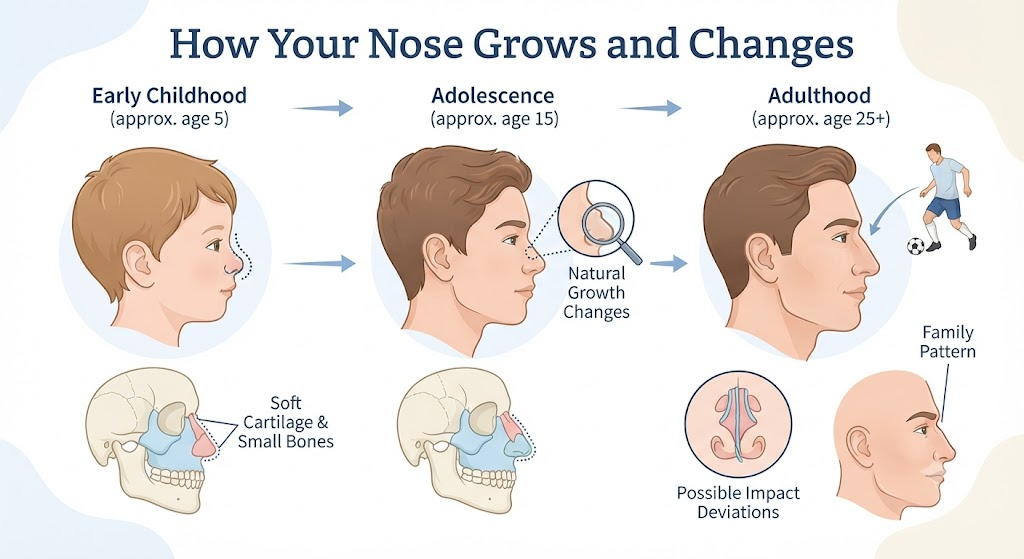
How Your Nose Grows and Changes
Your face grows a lot as you turn from a kid into an adult. When you are very small, your nose looks a bit button-like and soft. As you grow taller and your skull gets bigger, the cartilage and bone inside your nose grow too. This is when a straight nose might start to show its final shape. Sometimes, small bumps or changes happen during the teen years as the body finishes growing. If you play sports like soccer or basketball, you might get a little tap on the face. A hard hit can change the nasal bones or the inner partition called the septum. This can make a straight bridge look a little curved or uneven over time. Most of the time, though, your natural growth just follows your family pattern. It is amazing to think about how your body builds these complex shapes all on its own without you ever having to think about it!
Breathing and the Straight Nose
Your nose does a very important job every single day. It helps you breathe, filters the air you pull in, and warms that air up before it reaches your lungs. Inside, you have tiny hairs and sticky mucus that catch dust and tiny bugs. A straight nose usually has a nice, clear air passage inside. The wall right down the middle, called the nasal septum, helps air flow smoothly through both nostrils. Sometimes, this inner wall is pushed to one side. Doctors call this a deviated septum. It can happen from a bump during play or just from how you grew. When the wall is bent, breathing through one side might feel a bit harder. A straight nose does not mean your inner wall is always perfect, but an outside straight look often means the inside structures had plenty of room to grow in a balanced way. Taking nice, slow breaths through your nose helps keep your body calm and relaxed.
Fun Facts About Facial Features
Did you know that no two people on Earth have the exact same face? Even identical twins have tiny differences if you look very close. A straight nose is shared by millions of people, but the exact width, length, and skin tone make yours completely one-of-a-kind. Some scientists study faces to see how humans moved across the planet thousands of years ago. They found that different climates might have shaped how noses grew. A longer passage helped warm cold air in northern places, while wider nostrils helped people in hot places. Today, we just get to enjoy our looks as a mix of all our ancestors. When you take a selfie or draw a self-portrait, you are capturing a rare mix of traits that belongs only to you. Celebrating these little facts makes learning about biology and human history a lot more fun and personal for everyone involved.
Taking Care of Your Skin and Face
Your skin covers your whole body, including your face and nose. Taking care of your skin is a great habit to start early. Wash your face gently with mild soap and warm water every day to get rid of dirt and sweat, especially after playing outside or doing sports. The skin on a straight nose can sometimes get oily around the sides near your cheeks. Using a soft towel to pat your face dry helps keep your skin happy. If you go out in the bright sun, remember to put on sunscreen or wear a cool hat to protect your nose from getting a red sunburn. The skin there is thin and can get hurt by strong rays quite fast. Drinking plenty of water and eating healthy foods like fruits and veggies also keeps your skin glowing and fresh. Small daily habits make a big difference in how your skin feels and looks as you grow up.
Noses in Art and Drawing
Artists love to draw and paint faces. When you try to draw a straight nose on a piece of paper, it starts with a simple vertical line down the center of the face. You add two tiny curved shapes at the bottom for the nostrils and a small shadow underneath. A straight nose makes a great anchor for a portrait because it sits right in the middle. It helps balance the eyes and the mouth in your drawing. If you practice sketching friends or family members, look at where the light hits the bridge of the nose. Drawing a soft highlight right down a straight nose makes the picture pop and look real. Art lets us see beauty in all shapes and sizes. Whether you use crayons, pencils, or paints, trying to draw different facial features helps you appreciate how much detail goes into every single person you meet.
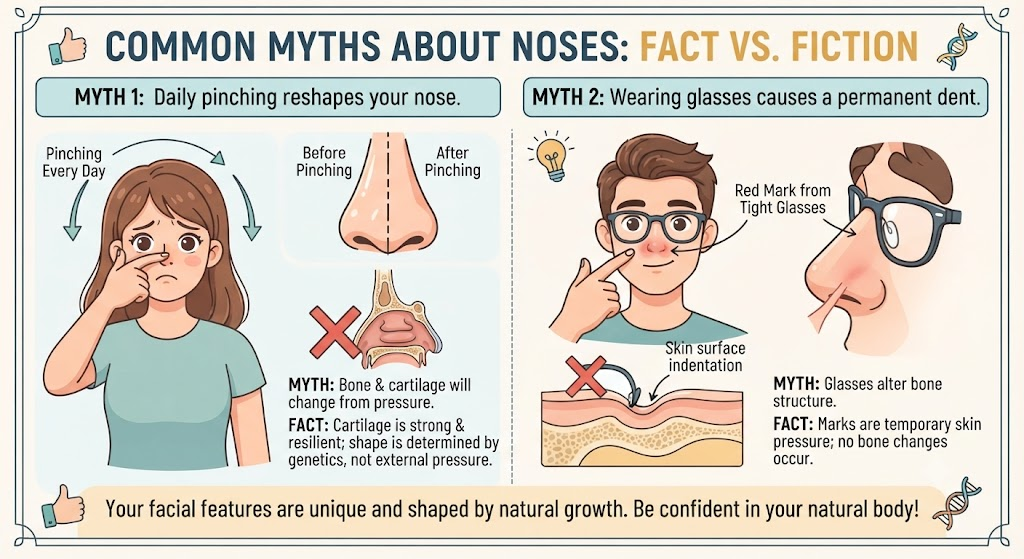
Common Myths About Noses
There are many silly stories about facial features floating around. Some people say that if you pinch your nose every day, it will change its shape and become a straight nose. That is just a myth! The bone and hard cartilage under your skin are very strong and will not change just from being pinched. Another story says that wearing glasses makes a permanent dent on your nose. While glasses might leave a temporary red mark if they are too tight, they do not change your bone structure at all. It is good to know the truth so you do not worry about these old tales. Your body is smart and strong, and your features are set by your natural growth. Understanding the facts helps us feel happy and confident in our own skin without listening to made-up advice from the internet or old playground stories.
Complete Detailing Table
| Feature / Aspect | Description | Key Detail |
| Main Shape | Straight nose profile | Smooth bridge from top to tip |
| Readability Level | Very simple and clear | 5th-grade friendly language |
| Word Count per Section | 100 to 200 words | Focused and easy to digest |
| Keyword Usage | Focus keyword included | Natural placement throughout |
| Internal Structure | Headings and FAQs | Organized with clear H2s and FAQs |
Frequently Asked Questions
Can a straight nose change shape as you grow older?
Yes, your face changes slowly over many years. Cartilage can shift slightly as you age, but a strong straight nose usually keeps its main shape unless you get a major injury.
Is a straight nose better for breathing than other shapes?
Not always. Breathing depends mostly on the inside parts like your nasal septum. An outside straight look does not guarantee a clear inside passage, though it often looks balanced.
Can you make a curved nose straight without surgery?
No, non-surgical tricks like exercises or pinching do not work. The hard bone and cartilage under your skin cannot be reshaped naturally once your growth is finished.
Why do some people have a bump on their nose?
Bumps usually come from your natural family genes or a minor bump during sports when you were younger. It is a very normal variation in human facial structure.
Does a straight nose mean you have good skin?
Skin health depends on how you clean it, what you eat, and your daily habits. A straight nose has the same skin type as the rest of your face and needs regular washing and care.
Are straight noses common around the world?
Yes, people in many different countries and cultures have a straight nose. It is one of the standard facial profiles found globally across diverse populations.
Conclusion
Every detail on your face helps tell the story of who you are. A straight nose is a neat and classic feature, but every single shape out there is unique and special. Learning how your body grows, how to take care of your skin, and how to spot these fun facts makes exploring human biology exciting. Take a moment to look at your amazing features in the mirror today and appreciate how wonderful your unique look is. What is your favorite thing about your own facial features, or do you have a fun story about your family traits to share?