
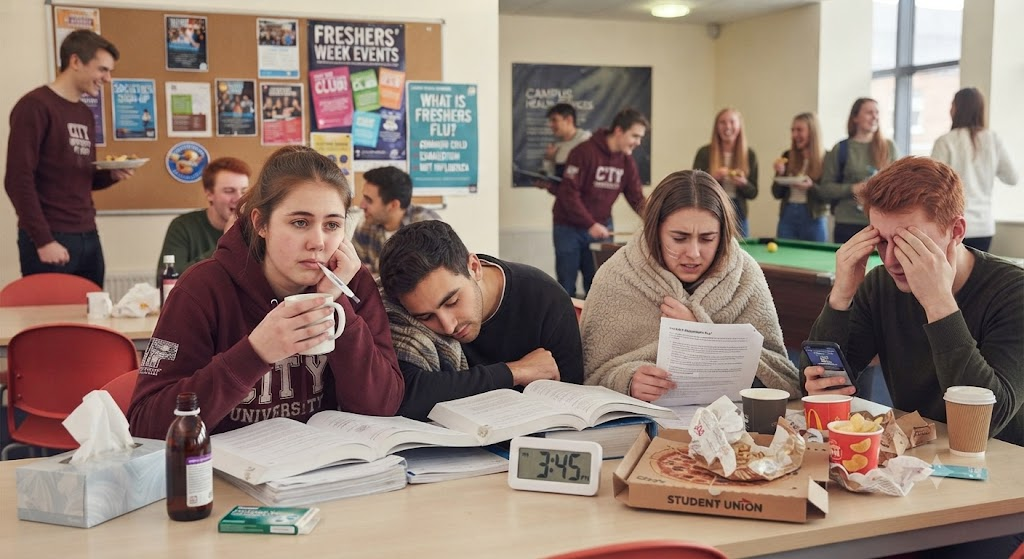

Starting university is a huge adventure. Freshers Flu Meaning You meet new friends, join fun clubs, and stay up late talking in your dorm room. But sadly, many new students get hit by a sudden wave of sniffles, coughs, and tiredness right after classes begin. People call this sickness “freshers flu meaning” the classic bug that goes around campus every single autumn.
Do not let the name fool you. It is not an actual case of the dangerous influenza virus. Instead, it is a very common mix of a regular cold, a sore throat, and pure exhaustion. Your body suddenly goes from a relaxed summer routine to a super busy schedule. You are shaking hands with dozens of new people every single day. You are sleeping less and eating more junk food from the student union. All of this puts a lot of stress on your immune system.
When your defenses drop, any tiny germ floating around the lecture hall can easily knock you down. Think of it as your body shouting at you to slow down. It is your system telling you that running on four hours of sleep and coffee is not a great long-term plan. Understanding the freshers flu meaning helps you realize you are not alone. Thousands of other students across the country are sniffling right under the exact same blankets at this very moment.
10 Quick Facts About Campus Sickness
| Feature | Details |
| Real Name | Common cold or upper respiratory infection |
| Main Cause | Stress, lack of sleep, and close contact |
| Peak Time | First two to four weeks of term |
| Common Signs | Sore throat, runny nose, mild fever, fatigue |
| Recovery Time | About one week with good rest |
| Best Defense | Hand washing and actual sleep |
| Worst Habit | Pulling all-nighters before exams |
| Magic Cure | None exists, just time and fluids |
| Who Gets It | Mostly first-year university students |
| Prevention | Balanced meals and staying hydrated |
Why Do New Students Get Sick So Fast?
The big jump from living at home to living in a busy student house changes everything for your body. You share a tiny kitchen and bathroom with five other people who also have different germs from different towns. When one person sneezes in a crowded seminar room, the air circulates those tiny droplets to everyone nearby.
Your daily habits change overnight, too. Home-cooked meals get replaced by cheap instant noodles and takeaway pizza. Fresh fruit and vegetables vanish from your plate. Without the right vitamins, your body cannot fight off basic infections. Add the late-night parties and early morning lectures, and you have a recipe for total physical burnout.
The Top Signs and Symptoms to Watch For
It usually starts with a gentle tickle in the back of your throat on a Tuesday morning. By Wednesday, your nose feels completely blocked, and your head feels heavy and fuzzy. You might get a mild temperature that makes you feel hot and cold at the exact same time.
Fatigue is the biggest sign of all. You might sleep for nine hours and still wake up feeling like you ran a marathon in the dark. Your muscles might ache slightly, and your voice might sound raspy during your afternoon tutorials. Recognizing these early warning signs lets you grab some throat lozenges before the sickness gets worse.
How to Tell the Difference Between a Cold and the Real Flu
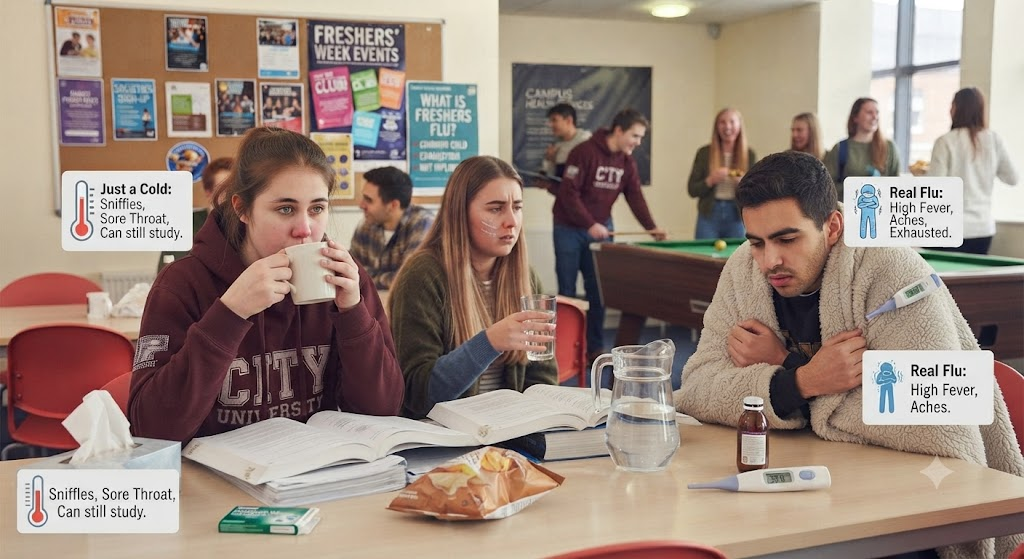
Many people use the word flu for any minor sniffle, but there is a big difference in how your body reacts. A standard cold creeps up on you slowly. Your nose runs, your throat hurts, and you can still walk to the campus shop for snacks.
Real influenza hits you like a truck in a single afternoon. It brings a high fever, severe body aches, and sudden shivering. If you can still scroll through your phone and chat with your roommate, you probably just have the standard campus bug rather than the actual medical flu virus.
Simple Ways to Boost Your Immune System on a Budget
You do not need expensive superfood powders to keep your body strong during your first semester. Visit the local supermarket and load up on basic frozen berries, bags of carrots, and budget-friendly oranges. Vitamin C is your best friend when you live in a shared student house.
Drink a massive glass of water the moment you wake up each morning. Dehydration makes your throat dry and gives germs an easy doorway into your system. Keep a reusable water bottle in your backpack and refill it between every single class. Simple habits build a strong shield against everyday campus germs.
The Importance of Getting Real Rest When You Feel Tired
University life feels like a race where you are not allowed to sit down. You want to attend every social event, join every society, and finish every reading assignment on time. But pushing through exhaustion only makes your recovery take three times longer.
Give yourself permission to stay in bed for an entire Sunday afternoon. Put your phone on silent, pull the curtains closed, and let your body focus all its energy on healing. Missing one social night beats spending two miserable weeks coughing through every single morning lecture.
Best Over-the-Counter Remedies for Student Budgets
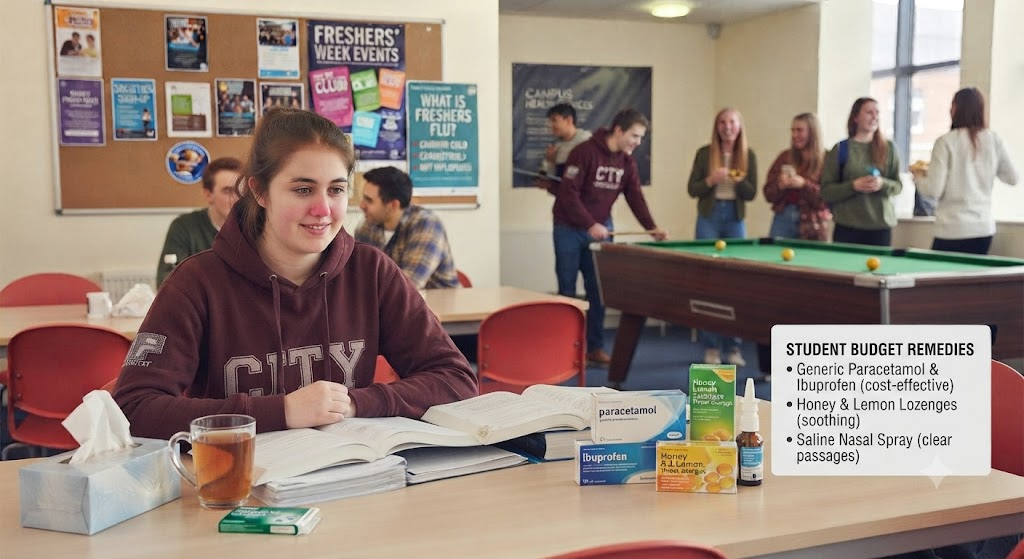
When the sniffles strike, head to the nearest high street chemist rather than ordering expensive branded kits online. Generic paracetamol and ibuprofen cost a fraction of the price and work just as well for reducing head pain and mild fevers.
Pick up a basic pack of soothing lozenges with honey and lemon. A simple saline nasal spray helps clear your blocked passages before bedtime so you can breathe easily. Always check the active ingredients on the back of the box to make sure you do not double up on cold medicines.
Smart Nutrition Tips for Busy Lecture Days
Eating well when you have a sore throat and zero energy feels like an impossible chore. Keep easy comfort foods in your cupboard like tinned tomato soup, whole-grain bread, and honey for your herbal tea. Warm liquids do wonders for loosening a tight chest.
Try to avoid drinking five cups of sugary energy drinks to get through your afternoon seminar. They give you a quick spike followed by a massive crash that leaves your immune system even weaker. A hot mug of ginger tea with real lemon provides a gentle, natural lift without the harmful sugar drop.
Mental Health and the Stress Connection
Being away from home for the very first time brings a heavy wave of silent pressure. You might worry about making friends, passing exams, or managing your own laundry and money. This mental stress releases cortisol into your bloodstream.
High stress levels directly shut down your body’s ability to fight off simple infections. When your mind feels overwhelmed, your physical health often follows right behind it. Taking ten quiet minutes to call your family or step outside for a fresh walk can lower your stress and protect your health.
When to See a Campus Doctor or Nurse
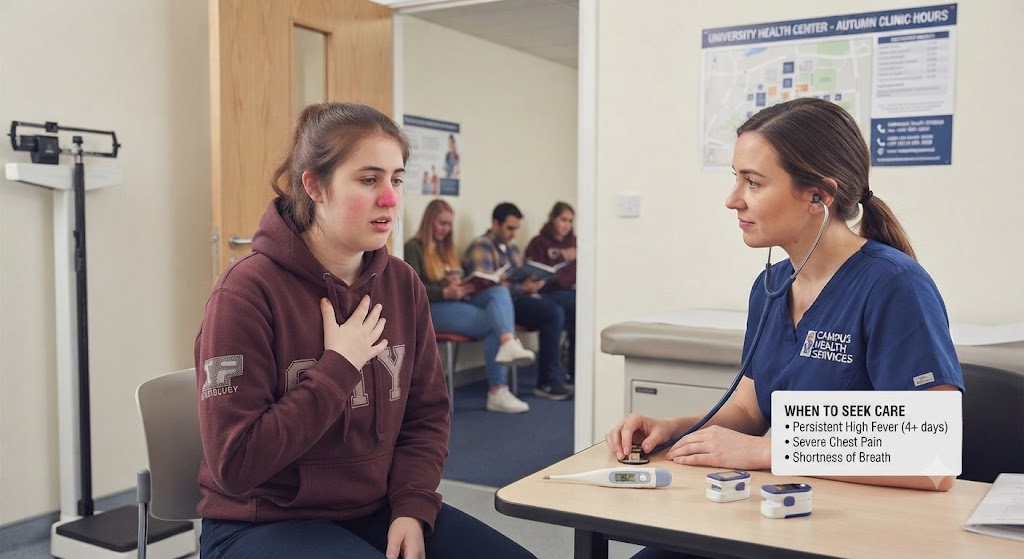
Most campus bugs clear up nicely within seven days if you drink enough water and sleep properly. However, you should never ignore a high fever that refuses to drop after four days of taking basic medicine.
If your chest hurts badly when you take a deep breath, or if your breathing feels short and tight, visit the university health center right away. Doctors on campus see hundreds of students every autumn with these exact symptoms and know how to help you get back on your feet safely.
Frequently Asked Questions
What does freshers flu actually mean?
It is a friendly term for the common cold and fatigue that new university students get during their very first weeks on campus.
Is freshers flu a real medical illness?
The sickness itself is real, but it is usually just a normal cold caused by stress, close contact, and lack of sleep rather than real influenza.
How long does this campus sickness usually last?
Most students start feeling better after five to seven days if they rest properly and drink plenty of water.
Can I prevent getting sick at university?
You can lower your chances by washing your hands often, sleeping at least seven hours a night, and eating fresh fruit and vegetables.
Should I still go to class if I feel sick?
If you have a mild sniffle, you can sit quietly in the back row, but stay home if you have a fever to protect your classmates from catching your germs.
Why is everyone getting sick at the same time?
Thousands of students arrive from different cities with different mild germs and live closely together in dorms, which helps illnesses spread very quickly.
Conclusion
Your university years should be an amazing time of learning and growth, not a blurry week of coughing under your duvet. Listen closely to what your body tells you, rest when you feel tired, and share these simple health tips with your new campus friends today!