
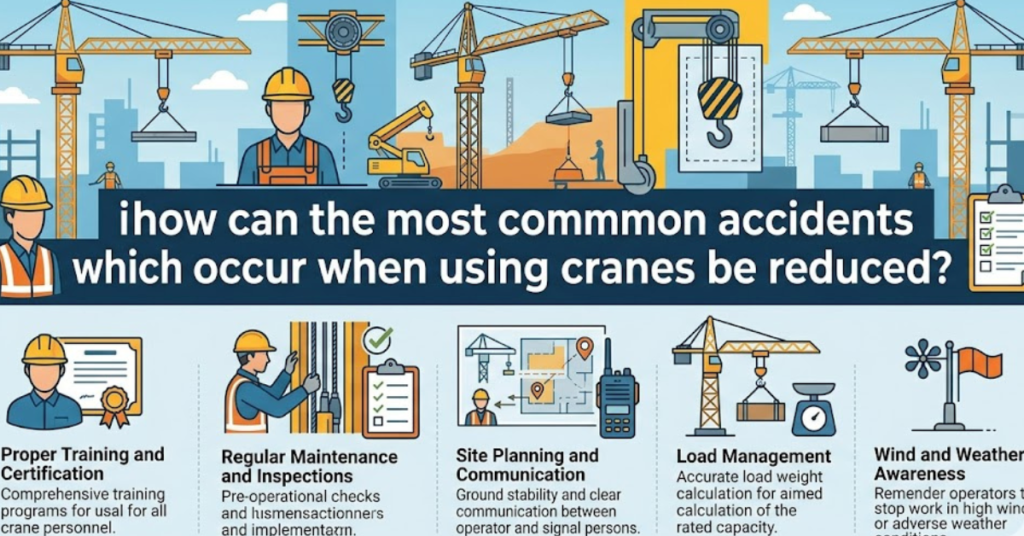

Crane operations are essential in construction, shipping, and heavy industry—but they also come with serious risks. That’s why the question how can the most common accidents which occur when using cranes be reduced? is so important for site managers, operators, and safety teams.
Most crane accidents don’t happen because cranes are “dangerous by default.” They usually come from preventable issues like human error, poor maintenance, or weak safety procedures. The good news? With the right systems in place, these risks can be dramatically reduced.
Let’s break it down in a practical, real-world way.
Common Causes of Crane Accidents
Before solving the problem, it helps to understand what usually goes wrong.
1. Operator error
A large percentage of incidents come from misjudgment—like swinging loads too fast or misreading signals.
2. Overloading the crane
Every crane has a strict load limit. Exceeding it can lead to tipping or structural failure.
3. Poor communication
Miscommunication between the operator and ground crew is a major safety risk.
4. Equipment failure
Faulty cables, worn-out hooks, or poor maintenance can lead to sudden breakdowns.
5. Unsafe site conditions
Uneven ground, high winds, or obstacles near lifting zones increase accident risk.
How Can the Most Common Crane Accidents Be Reduced?
Now let’s get into the core strategies that directly answer the main question.
1. Proper Training and Certification
One of the most effective ways to improve safety is ensuring every operator is properly trained.
This includes:
- Certified crane operation training programs
- Regular refresher courses
- Hands-on simulation practice
- Understanding load charts and safety limits
A trained operator is far less likely to make critical mistakes under pressure.
2. Regular Maintenance and Inspections
Cranes are heavy-duty machines that need constant checking.
Key maintenance steps:
- Daily pre-operation inspections
- Weekly mechanical checks
- Full scheduled servicing
- Immediate repair of worn components
Even small issues like a loose bolt can escalate into major accidents.
3. Clear Communication Systems
Many crane accidents happen because instructions are misunderstood.
To fix this:
- Use standardized hand signals
- Equip teams with radios or headsets
- Assign a dedicated signal person
- Confirm commands before lifting
Clear communication eliminates guesswork.
4. Respect Load Limits and Safety Charts
Overloading is one of the fastest ways to cause a crane failure.
Best practices:
- Always check load charts before lifting
- Account for wind, angle, and distance
- Never “estimate” weight
- Use load monitoring systems when available
Precision here is non-negotiable.
5. Improve Site Safety Conditions
A stable environment reduces unexpected hazards.
Steps include:
- Leveling ground before setup
- Keeping cranes away from power lines
- Setting exclusion zones around lifting areas
- Monitoring weather conditions
Even experienced operators struggle in unsafe environments.
6. Use Modern Safety Technology
Technology is playing a big role in reducing crane accidents.
Examples:
- Anti-collision systems
- Load sensors and alarms
- Automated shutdown features
- Camera-assisted visibility tools
These systems act as a second layer of protection when human error happens.
Building a Strong Safety Culture
Equipment and rules are important, but culture matters just as much.
A strong safety culture means:
- Workers feel responsible for safety
- Hazards are reported immediately
- Shortcuts are discouraged
- Safety meetings happen regularly
When safety becomes part of daily habits, accident rates drop significantly.
Quick Checklist for Crane Safety
Here’s a simple pre-operation checklist:
- Inspect crane condition
- Confirm load weight
- Check weather conditions
- Verify communication tools
- Establish safe working zone
- Ensure operator certification
- Test emergency systems
A few minutes of checking can prevent hours—or even years—of consequences.
FAQs
What is the most common cause of crane accidents?
Operator error and poor communication are among the leading causes, often combined with unsafe site conditions.
How often should cranes be inspected?
Daily visual checks and scheduled professional inspections are recommended depending on usage intensity.
Can crane accidents be completely prevented?
Why is overloading a crane so dangerous?
It can cause tipping, structural failure, or collapse, putting workers and equipment at serious risk.
Do modern cranes have safety systems?
Yes, many newer cranes include load sensors, alarms, and automatic safety shutoffs.
Conclusion
So, how can the most common accidents which occur when using cranes be reduced? The answer comes down to a combination of training, maintenance, communication, proper planning, and modern safety technology.
No single solution is enough on its own. But when all these measures work together, crane operations become significantly safer and more reliable.