
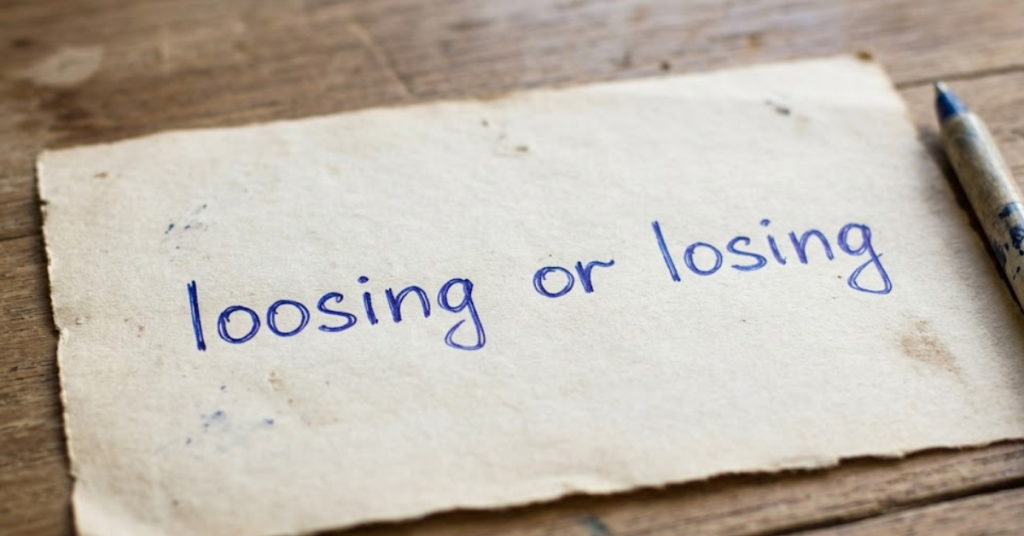

If you’ve ever typed loosing or losing and hesitated, you’re definitely not alone. These two words look similar, but only one is correct in most situations—and using the wrong one can make your writing look careless.
In this guide, we’ll break down the difference between losing and loosing, explain when to use each, and give simple examples so you never confuse them again.
Losing vs Loosing: Quick Answer
Let’s make it simple:
- Losing = the correct word (most common usage)
- Loosing = rarely used, specific meaning (not interchangeable with losing)
So in everyday English, “losing” is almost always correct.
What Does “Losing” Mean?
The word losing comes from the verb lose. It means failing to keep something, misplacing something, or not winning.
Common meanings of losing:
- Not winning a game or competition
- Misplacing something
- Failing to maintain something (like weight, money, or position)
Examples of “losing”:
- She is losing her keys again.
- The team is losing the match.
- He is losing weight slowly.
So if you’re talking about failure, absence, or misplacement, “losing” is the correct choice.
What Does “Loosing” Mean?
Now let’s look at loosing, which is often confused with losing.
Meaning of loosing:
Loosing comes from the verb loose, which means to release or set free.
Examples of “loosing”:
- The fisherman is loosing the net into the water.
- They are loosing the horses from the stable.
However, this usage is rare in modern everyday English.
Most of the time, if you mean “failing or misplacing,” you should use losing, not loosing.
Losing or Loosing: Key Differences
Here’s a simple breakdown of loosing or losing:
| Word | Meaning | Usage Frequency |
| Losing | Not winning or misplacing | Very common |
| Loosing | Releasing or setting free | Rare |
Easy trick to remember:
- Lose = Losing (failure or missing something)
- Loose = Loosing (setting free)
Why People Confuse Losing and Loosing
This spelling mistake happens a lot because:
1. Similar pronunciation
Both words sound almost identical when spoken.
2. Spelling confusion
Only one extra “o” changes the meaning completely.
3. Auto-correct errors
Typing quickly often leads to incorrect suggestions being accepted.
Common Mistakes with “Losing”
Here are some incorrect and correct examples:
- I am loosing my phone
- I am losing my phone
- They are loosing the game
- They are losing the game
- She is loosing weight
- She is losing weight
Simple Memory Trick
Here’s an easy way to never confuse them again:
If it’s about failure or misplacing = LOSING (only one “o”)
If it’s about releasing something = LOOSING (double “o”)
Think:
- Losing = losing a game
- Loosing = loosing a rope
FAQs
1. Is it losing or loosing?
The correct word in most cases is losing.
2. When should I use loosing?
Use loosing only when referring to releasing or setting something free.
3. Why do people say loosing instead of losing?
It’s usually due to spelling confusion and pronunciation similarity.
4. Is loosing a correct English word?
Yes, but it is rarely used in modern everyday English.
5. What is the meaning of losing in simple words?
It means failing to win or misplacing something.
Conclusion
The confusion between loosing or losing is very common, but the rule is simple: losing is almost always the correct choice in everyday writing.
Unless you are talking about releasing something (like this a rope or animals), stick with losing for games, objects, weight, or opportunities.
Mastering small differences like this helps your writing become clearer, more professional, and easier to understand.