

If you’ve ever found yourself confused between window sill or window seal, you’re definitely not alone. These two terms sound similar, but they refer to completely different parts of a window. Mixing them up is common in everyday conversation, home improvement projects, and even online searches.
In this guide, we’ll clearly explain the difference between a window sill or seal, what each one does, and how to use the terms correctly. By the end, you’ll confidently know whether you’re talking about a windowsill or window seal in the right context.
What Is a Window Sill?
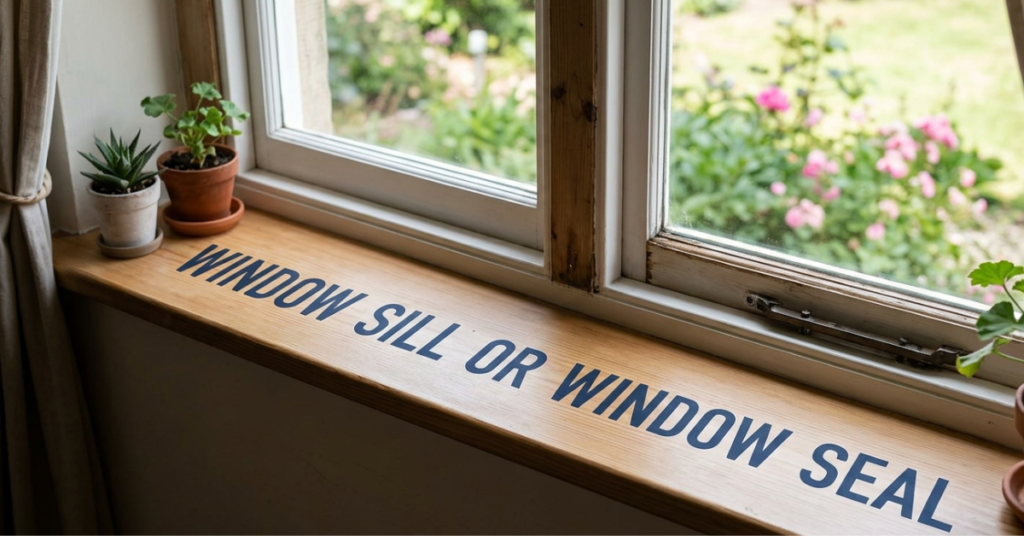
A window sill (sometimes written as windowsill) is the horizontal ledge at the bottom of a window.
Main functions of a window sill:
- Supports the window frame structurally
- Helps direct rainwater away from the wall
- Provides a small shelf inside the room
- Adds decorative value to interior design
Types of window sills:
- Interior window sill – inside the room, often used for decoration
- Exterior window sill – outside, designed for water drainage
Example: “She placed plants on the window sill to decorate the room.”
So when you hear window sill or window seal, the sill is the physical ledge.
What Is a Window Seal?
A window seal refers to the material or system that closes gaps around the window to prevent air, water, or dust from entering.
Functions of a window seal:
- Improves energy efficiency
- Prevents air leaks
- Blocks moisture and rainwater
- Reduces noise from outside
Common materials used:
- Rubber seals
- Silicone caulking
- Foam strips
- Weather stripping
Example: “The window seal stopped cold air from coming into the room.”
So in the comparison of window seal or sill, the seal is about insulation and protection.
Window Sill or Window Seal: Key Differences
Here’s a simple breakdown to avoid confusion:
| Feature | Window Sill | Window Seal |
| Location | Bottom ledge of window | Around edges of window |
| Purpose | Support + decoration | Insulation + sealing gaps |
| Material | Wood, stone, concrete | Rubber, silicone, foam |
| Visibility | Visible structural part | Usually hidden |
Simply put:
- Sill = structure + design
- Seal = protection + insulation
Why People Confuse Window Sill and Window Seal
The confusion between windowsill or window seal happens for a few reasons:
1. Similar pronunciation
Both sound like “window something,” which leads to mix-ups.
2. Home repair context
People often talk about “fixing windows,” which involves both parts.
3. Spelling mistakes online
Search engines show both terms interchangeably.
4. Lack of technical knowledge
Many homeowners aren’t familiar with construction terminology.
Which One Should You Be Talking About?
It depends on the issue:
Use “window sill” when:
- Talking about design or structure
- Referring to interior decoration
- Discussing physical ledges
Use “window seal” when:
- Fixing drafts or leaks
- Improving insulation
- Repairing gaps around windows
Why Window Seals and Sills Both Matter
Even though they are different, both are important in a home:
Benefits of a good window sill:
- Enhances room aesthetics
- Supports window durability
- Provides functional space
Benefits of a good window seal:
- Saves energy bills
- Keeps indoor temperature stable
- Prevents water damage
A well-designed window needs both working properly.
FAQs
1. Is it window sill or window seal?
Both are correct but refer to different parts of a window.
2. What is a window sill used for?
It supports the window and acts as a small ledge inside or outside.
3. What is a window seal?
It prevents air, water, and dust from entering through gaps.
4. Can a damaged window seal cause drafts?
Yes, broken seals often cause air leaks and energy loss.
5. Is windowsill one word or two?
Both “window sill” and “windowsill” are commonly used.
Conclusion
The confusion between window sill or window seal is very common, but the difference is actually simple. A window sill is the visible ledge that supports and decorates the window, while a window seal is responsible for insulation and preventing leaks.
Understanding the difference between window sill or seal helps you communicate better during home repairs, renovations, or even when shopping for building materials. Next time you hear the terms, you’ll know exactly which part of the window is being discussed.